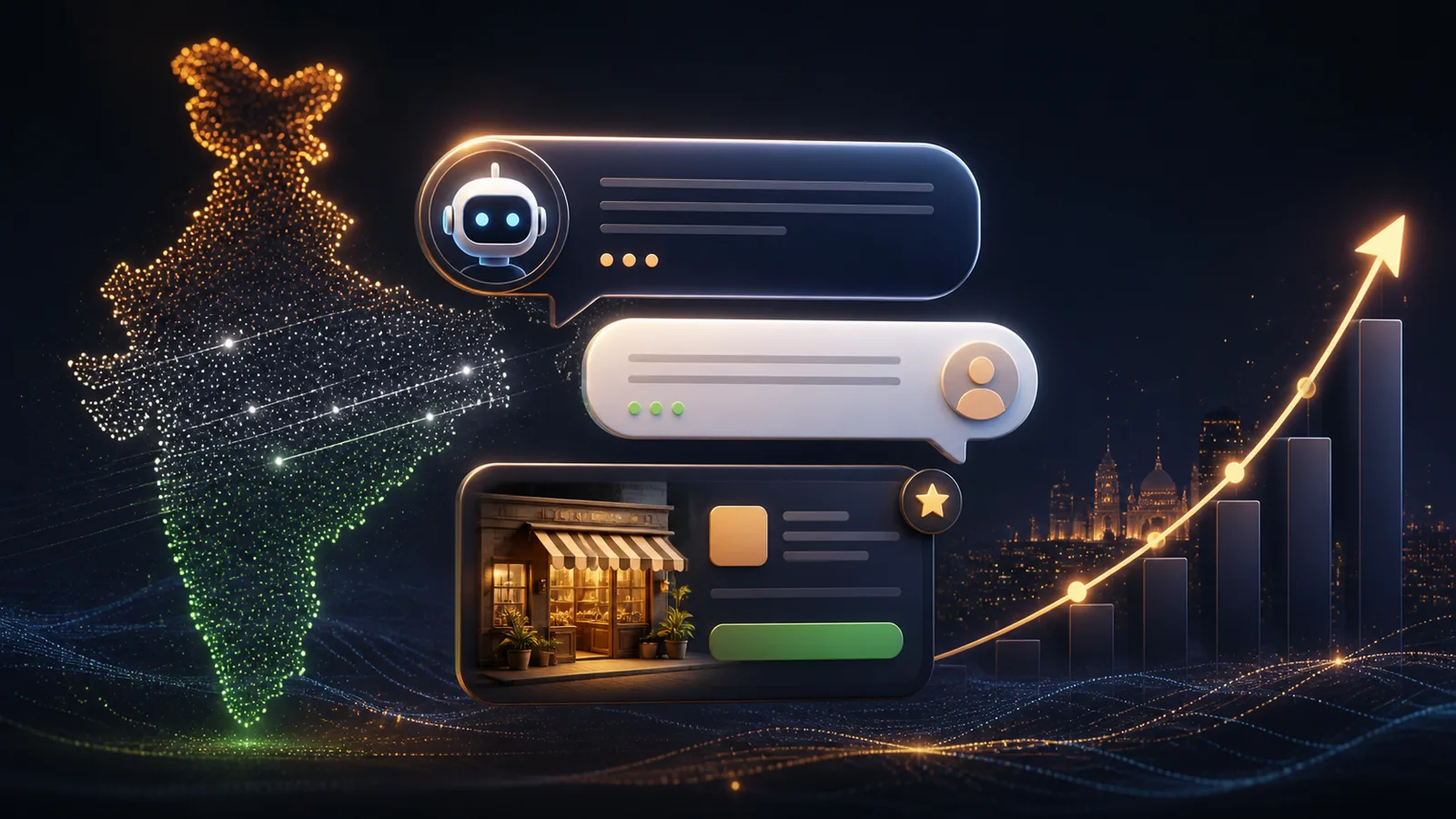

OpenAI Ads India is now live for self-service advertisers. The email that landed in my inbox was not saying OpenAI Ads are “not” in India. It was announcing that access is now available in India. I checked the live country list on 2 September 2026, and India is marked available.
I use ChatGPT heavily. I have already written about what its rapid upgrades mean for ordinary dads, and it now helps me think through work, clean up ideas, troubleshoot technology, draft outlines and occasionally answer a question that starts with, “Papa, why does this work?” when I am equally keen to know.
So when OpenAI emailed me about Ads Manager access in India, I paid attention. Not because the internet desperately needs another rectangle asking us to buy something. It does not. I paid attention because advertising inside an AI conversation is fundamentally different from an ad beside a list of search results.
My short take: ChatGPT Ads could become a valuable growth channel because they can reach people while they are explaining a need, comparing options and making a decision. But companies that simply copy their Google Ads campaign, add the word “AI” and expect magic will probably burn money with great efficiency.
OpenAI Ads India: self-service access is now available
OpenAI announced on 31 August 2026 that advertisers could begin buying ChatGPT ads directly through Ads Manager across India and several other regions. Its current advertiser availability page lists India as available for self-service access.
That does not mean every Indian user will suddenly see an ad after every prompt. Advertiser access and the user rollout are separate. OpenAI says ads may appear for eligible users on Free and Go plans, while Plus, Pro, Business, Enterprise and Edu remain ad-free. Accounts identified as belonging to people under 18 and Temporary Chats do not show ads.
For Indian businesses, however, the OpenAI Ads India door is officially open. The minimum daily campaign budget is currently ₹725, according to OpenAI’s campaign setup guide. That is the budget floor—not the cost of one click, not a promised cost per lead and definitely not a guaranteed shortcut to growth.
What an ad in ChatGPT actually looks like
This distinction matters: companies are not paying to change ChatGPT’s answer.
OpenAI says ads appear below a response, are clearly labelled as sponsored and remain visually separate from the answer. Advertisers cannot pay to shape, rank or alter what ChatGPT says. Think of it as a relevant paid placement near the conversation, not a sponsored sentence secretly stitched into the model’s reply.
An ad can include the advertiser name, a headline, description, image and landing-page link. OpenAI’s system considers signals such as the current conversation’s context and intent, the ad copy, the landing page, advertiser-supplied “context hints” and targeting choices. If a user has enabled ad personalisation, selected signals from their broader ChatGPT experience may also be used.
Those context hints are important, but they are not magic exact-match keywords. You are giving the system useful clues about the conversations where your offer belongs; you are not reserving a phrase like a table at your favourite restaurant.
Why AI-search advertising is different
Traditional search advertising begins with a query. Social advertising often begins with an audience profile or behaviour. Conversational AI can begin with a full situation.
A person may not type “best project-management software”. They may tell ChatGPT, “I run a 12-person design agency, half the team is remote, clients keep changing deadlines and I need something simpler than our spreadsheet.” That single prompt contains company size, industry, working style, pain points and a preference. It is much richer than two or three keywords.
| Channel | Primary signal | What the user may be doing | What the advertiser must get right |
|---|---|---|---|
| Google Search | Keywords and query intent | Looking for a specific answer, site or product | Keyword relevance, bid, ad copy and landing page |
| Social platforms | Audience and behavioural signals | Scrolling, discovering and being entertained | Creative, audience fit and interruption value |
| ChatGPT Ads | Conversation context and intent | Exploring, comparing, planning or deciding | Context fit, usefulness, trust and a strong next step |
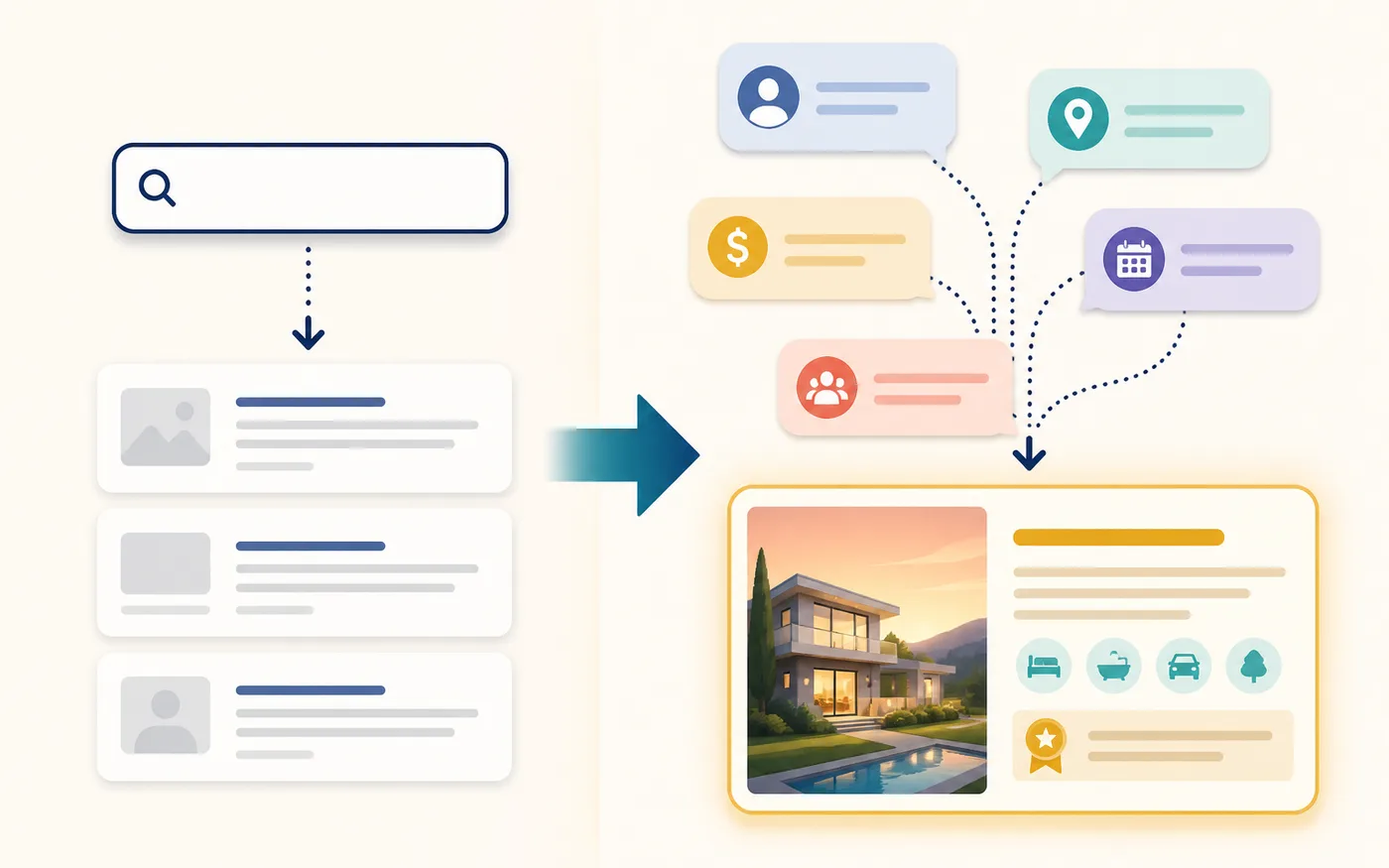
This is why I do not see ChatGPT Ads as “Google Ads with a chatbot skin”. The valuable part is not that AI is fashionable. The valuable part is that the user has often already explained the job they are trying to get done.
How ChatGPT Ads can help companies grow
1. Reach buyers while they are building a shortlist
Many buying decisions happen before someone visits a company’s website. People ask ChatGPT to define their options, compare trade-offs, prepare questions and narrow a shortlist. A relevant ad at that point can introduce a business before the final branded search ever happens.
For a smaller Indian company, this matters. You may not have the brand recall of a giant, but you may still have the most useful answer to a very specific need.
2. Compete on relevance, not only on famous keywords
Popular search keywords can become expensive and brutally competitive. Conversational intent gives businesses a chance to organise campaigns around real customer situations: the problem, constraints, desired outcome and moment of action.
A travel company could build one ad group around parents planning a child-friendly short break, another around first-time international travellers and another around last-minute business trips. Same broad category; completely different conversations and landing pages.
3. Learn the language customers actually use
OpenAI Ads Manager reports impressions, clicks, spend, click-through rate, average CPC, average CPM and conversions when measurement is configured. The first benefit may not be massive scale. It may be discovering which customer problem, promise and explanation earns attention.
That learning can improve much more than the ad. It can sharpen website copy, sales scripts, product pages, FAQs and even what a company builds next.
4. Give useful brands a new discovery surface
ChatGPT is increasingly where people explore what to do, not only where they retrieve a fact. That creates an opening for local services, education businesses, digital products, household brands, travel companies and other currently eligible categories to appear at a decision-making moment.
There are policy limits. OpenAI’s advertising policies restrict or prohibit a number of sensitive and regulated categories, and they require the ad and landing page to be truthful and consistent. Before creating a beautiful campaign, check whether the business and offer are eligible. It saves the heartbreak of polishing a door that the policy will not let you open.
The trust question: will advertisers read my chats?
As a heavy ChatGPT user, this was my first serious question too.
OpenAI says advertisers do not receive access to chats, chat history, memories, names, email addresses, precise location or personal details. Advertisers receive aggregated, non-identifying performance information such as views and clicks. Users can turn off ad personalisation, clear data used for ads, hide or report an ad and see why an ad was shown.
Turning off personalisation does not necessarily remove ads; it means selection relies more on the current conversation instead of broader eligible signals. Paid plans listed above remain ad-free, and OpenAI also describes a more limited ads-free option for eligible Free users.
This is the part OpenAI has to get right every single day. A search engine ad can be annoying. An ad beside a personal AI conversation can feel intrusive much faster. Clear labels, separation from answers and meaningful controls are not decorative features; they are the price of keeping user trust.

My ₹725-a-day OpenAI Ads India test plan
If I were testing ChatGPT Ads for a company today, I would not begin with ten campaigns and a presentation titled “AI Transformation Roadmap”. I would begin with one real customer problem.
- Choose one measurable goal. Pick qualified traffic, a demo request, a sale, a booking or another action you can actually measure.
- Write down three customer situations. Describe the conversations in which your product is genuinely useful. Include the problem, constraints and desired outcome.
- Create a landing page for that situation. Do not dump every visitor on the homepage and ask them to conduct an archaeological dig for the offer.
- Build two or three honest creative variations. Test different useful promises, not different shades of exaggerated certainty.
- Add clean measurement. Configure conversion tracking where appropriate and use UTM parameters so ChatGPT traffic is visible in your analytics.
- Run a controlled seven-day learning test. At the current ₹725 daily minimum, seven days represents a ₹5,075 weekly budget ceiling for an unchanged daily budget. OpenAI notes that individual-day spend can fluctuate up to twice the daily amount while the seven-day total stays within seven times the daily budget.
- Judge quality, not clicks alone. Look at conversion rate, lead quality, customer questions and what people do after arriving.
OpenAI supports CPM, CPC and conversion-optimised CPC objectives. The correct choice depends on the goal. A click campaign cannot rescue a confusing landing page, and a conversion campaign cannot manufacture a value proposition that customers do not want.
What companies should do before spending a rupee
- Check current country, category and advertiser eligibility.
- Make sure the ad promise matches the landing page.
- Test the mobile experience; curiosity disappears quickly on a slow page.
- Use context hints as guidance, not as keyword stuffing in a new costume.
- Set conversion tracking and UTM parameters before launch.
- Avoid promises such as “guaranteed growth” or “best in India” unless they are genuinely supportable.
- Keep creative clearly your own; do not imitate ChatGPT’s interface or imply OpenAI endorsement.
- Review results after enough time to learn, then pause, improve or scale.
Final Thoughts from the Dad Desk
I am excited about the business opportunity, but I am more interested in whether the experience remains useful.
The best ChatGPT ad should feel like a relevant option appearing at the right moment—not like a salesman jumping out from behind the sofa while I am trying to solve a problem. If companies respect that difference, they can earn attention from people who are already thinking deeply about a need. If they treat the platform as one more place to shout “BUY NOW”, users will learn to ignore it with the same Olympic-level skill we have developed everywhere else.
For Indian companies, the smart move is to start small, measure honestly and build campaigns around real customer conversations. The OpenAI Ads India opportunity is not to buy ChatGPT’s answer. You cannot. The opportunity is to become a useful next step after the answer.
And that, to me, is where the growth potential really begins.
If you enjoy practical, dad-tested thoughts on AI and everyday technology, you can explore more in the DadsBanter Technology section.
Until next time, banter on.
Facts and availability checked on 2 September 2026. OpenAI Ads Manager is a beta product, so pricing, eligibility, formats and country availability may change. See the official India expansion announcement and OpenAI’s advertiser basics for current details.